
Election Day Is November 3: Make a Plan and Know What Is on Your Ballot
The TransLatin@ Coalition has gathered voting information and guidance from community experts and civil rights advocates to help our communities understand what is at stake and make a plan to participate.
Election Day is Tuesday, November 3, 2026. Decisions made through this election will affect housing, health care, immigration, economic opportunity, public safety, community investment, and our ability to participate in the democratic process.
For transgender, gender-expansive, and intersex (TGI) people, these issues are not abstract. Government decisions can directly affect our ability to live safely, access essential services, support ourselves, and participate fully in our communities.
That is why we are sharing key voting information and guidance from trusted community organizations on two measures appearing on the ballot: Los Angeles County Measure E and California Proposition 39.
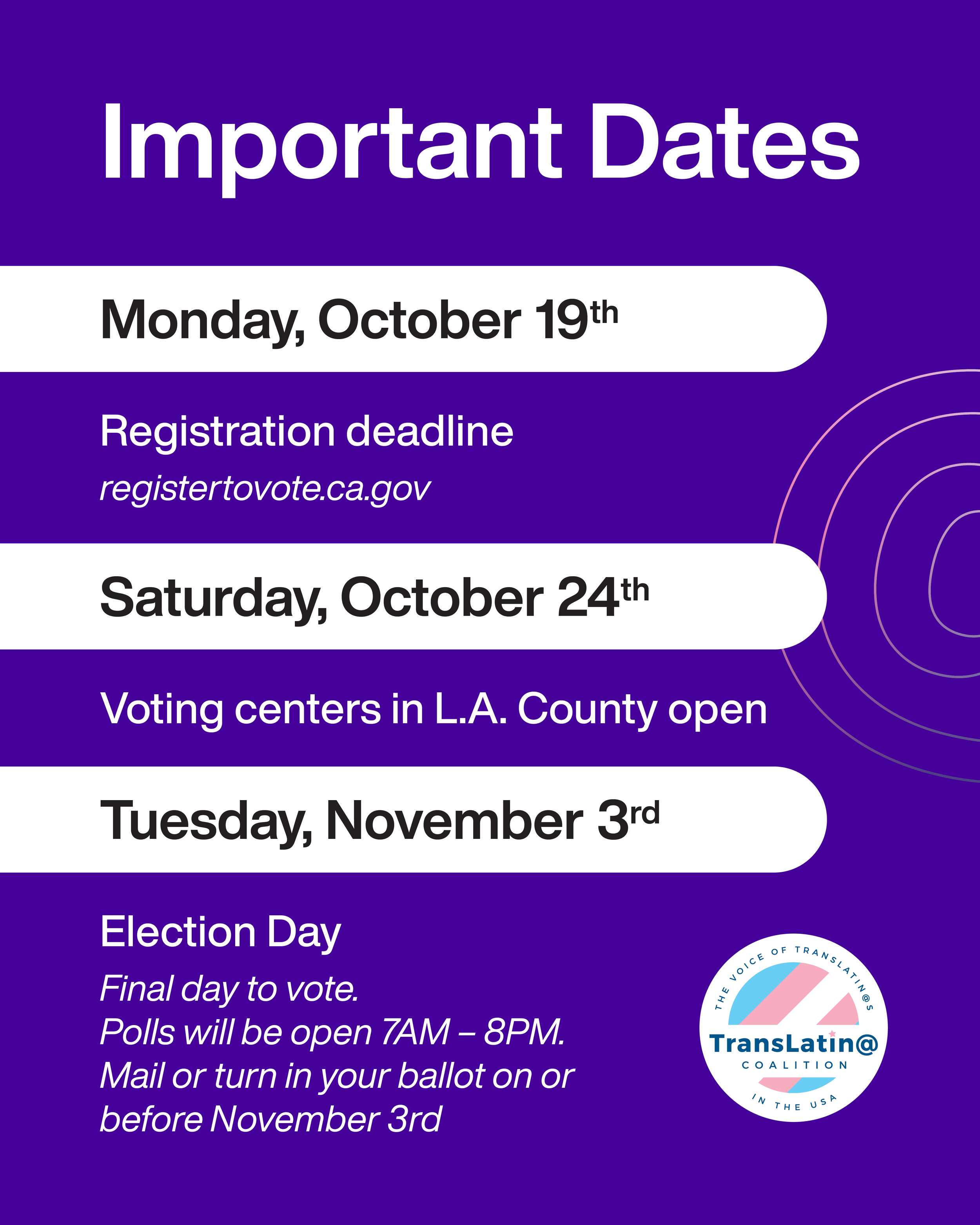
Important Election Dates
The deadline to register to vote online is Monday, October 19. If you miss the deadline, California offers conditional voter registration at county elections offices and voting locations through Election Day.
Los Angeles County voters can:
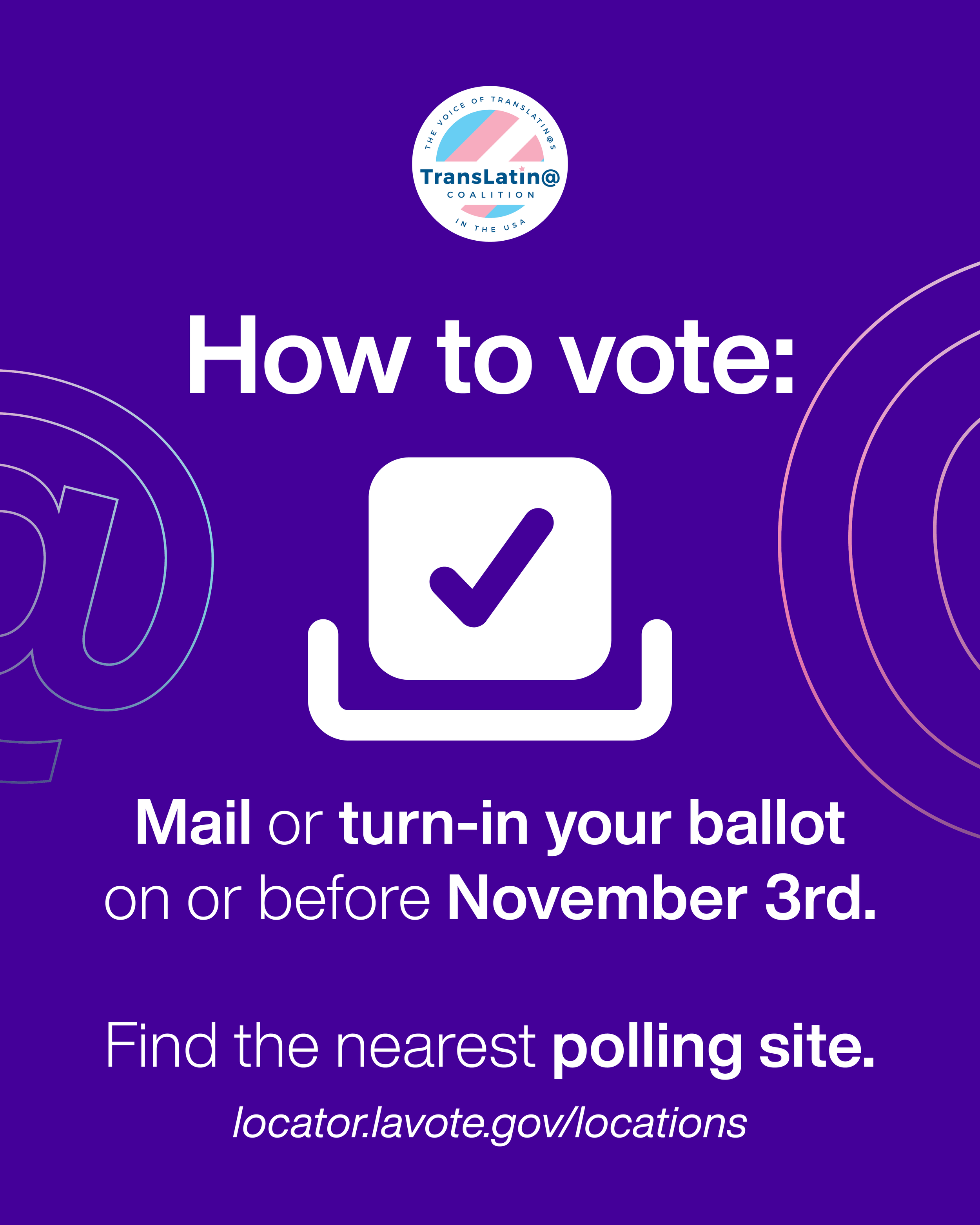
Return a vote-by-mail ballot through the mail
Use an official ballot drop box
Vote in person at any participating Vote Center
Vote early at select Vote Centers beginning October 24
Vote Centers will be open from 7:00 a.m. to 8:00 p.m. on Election Day. Vote-by-mail ballots must be postmarked by November 3 or deposited in an official ballot drop box by 8:00 p.m.
Register or check your registration at RegisterToVote.ca.gov. Los Angeles County voters can find Vote Centers, ballot drop boxes, and other election resources at LAVote.gov.
Guidance From Community Experts
Community-based organizations and civil rights advocates have reviewed two ballot measures with significant implications for Los Angeles County and California voters. The information below draws from the work of organizations including Re-Imagine L.A. and the ACLU of Southern California.
Vote YES on Los Angeles County Measure E
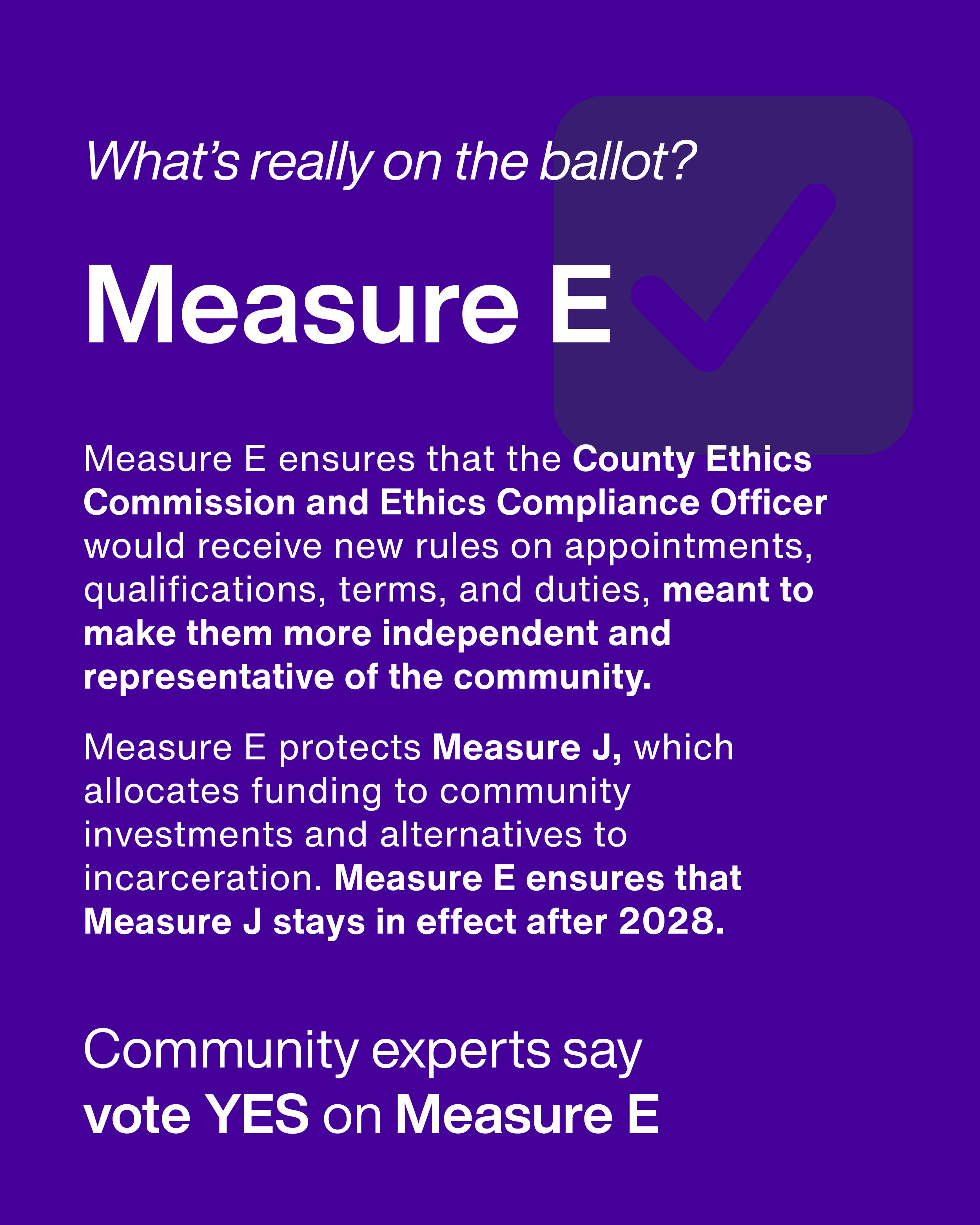
Measure E would amend the Los Angeles County Charter to provide greater independence and structure for the County Ethics Commission, Office of Ethics Compliance, and Ethics Compliance Officer.
The measure addresses appointments, qualifications, responsibilities, authority, and funding. It would also continue the County's commitment to community investment and alternatives to incarceration currently connected to Measure J.
Re-Imagine L.A. has documented why protecting Measure J matters. The measure directs County resources toward housing, mental health care, youth development, job training, and alternatives to incarceration. The ACLU of Southern California recommends voting YES on Measure E to strengthen ethics oversight and preserve the County's commitment to these community investments.
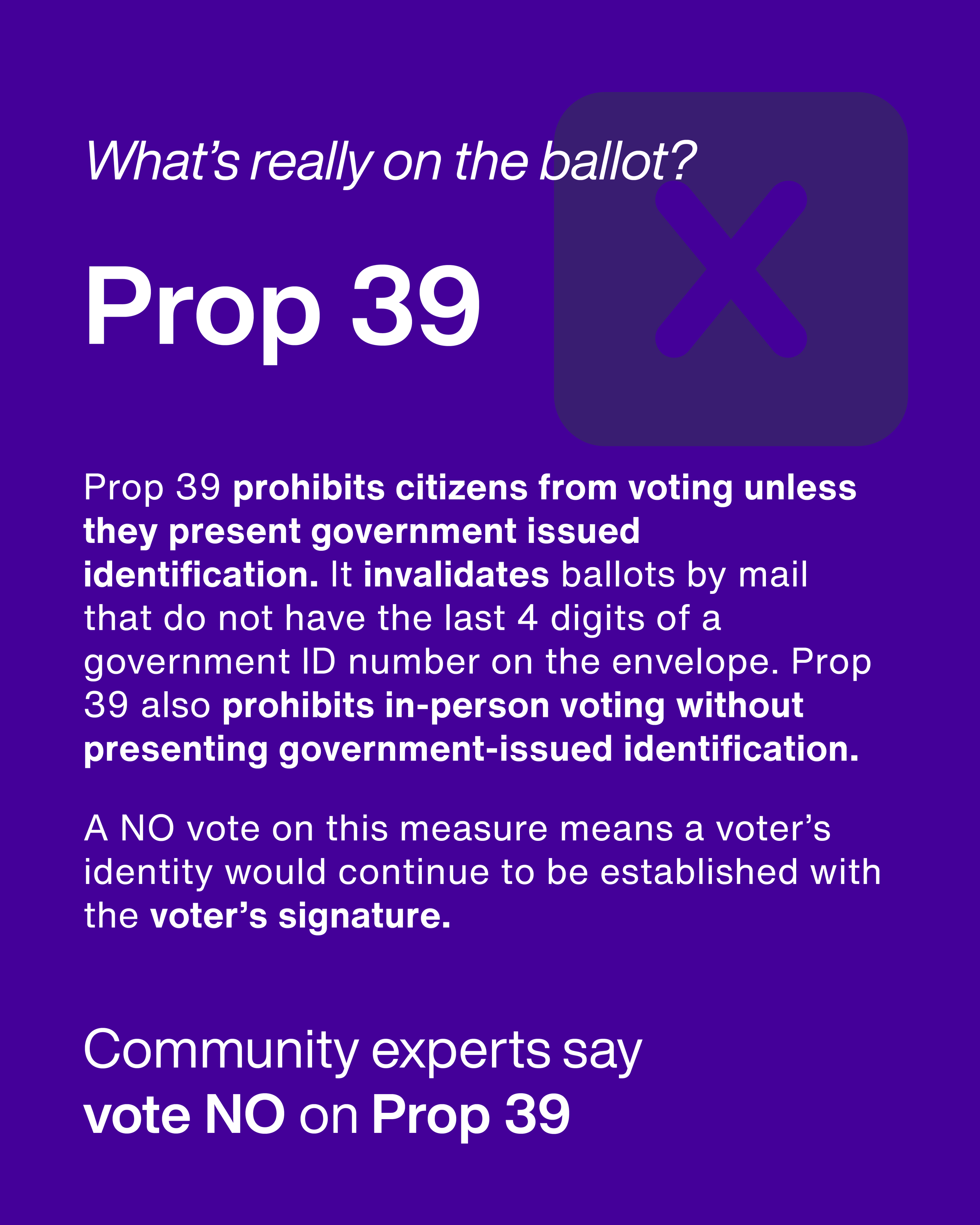
Vote NO on Proposition 39
Proposition 39 would impose additional voter identification and citizenship-verification requirements in California. People voting in person would be required to present qualifying government-issued identification, while vote-by-mail voters would need to provide identifying information on their ballot envelopes. The proposition would also create a state-issued voter identification card and require additional legislation before parts of the measure could be implemented.
These requirements could create additional barriers for eligible voters, including TGI people whose identification may not accurately reflect their name, gender marker, or current information.
The ACLU of Southern California recommends voting NO on Proposition 39, warning that unclear identification requirements could create unnecessary barriers and prevent eligible voters from accessing the polls.
Information Supports Voter Autonomy
Every eligible voter has the right to make their own decisions about voting and civic participation. Our responsibility is to provide information grounded in our organizational policy priorities so community members can review the facts, ask questions, and make informed choices.
Too often, decisions affecting our communities are made without our participation or lived experiences in the room. Accessible civic education helps us better understand what is at stake, participate in policy conversations, and hold elected officials accountable for their public commitments.
Review your ballot before Election Day. Learn about the measures and other decisions before you. Talk with your family, friends, and familia elegida. Help others find reliable information and make a voting plan.
Our voices matter. Our experiences matter. Our participation in shaping the policies affecting our lives matters.
