
TGI Housing Initiative Presented at the Los Angeles County Housing & Homelessness Cluster Meeting
TLC brought a community-led housing proposal to county leaders, calling for solutions designed around the realities and needs of TGI people.
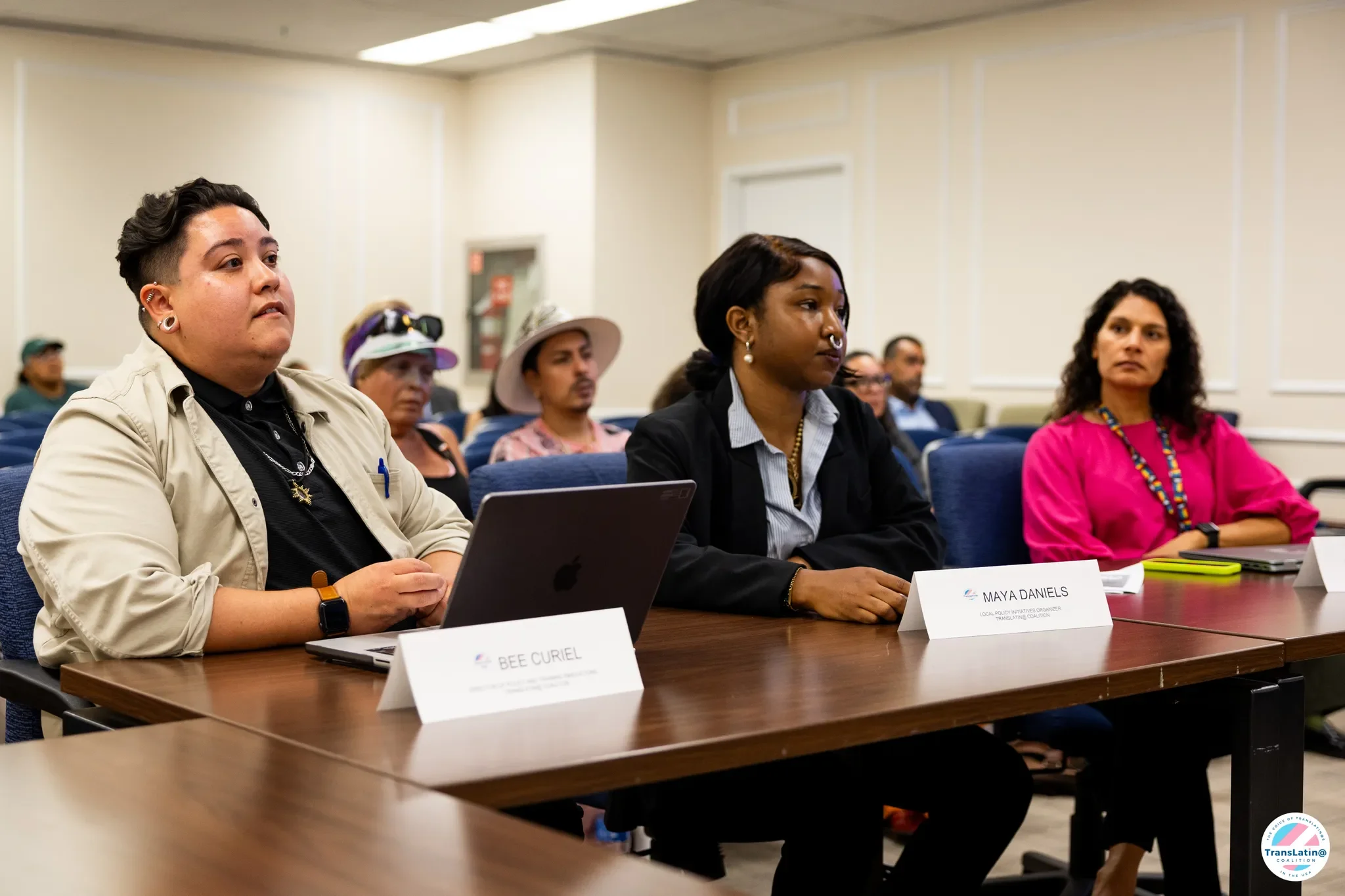
Bee Curiel and Maya Daniels from The TransLatin@ Coalition’s Policy Department giving a presentation at the Los Angeles County Housing & Homelessness Cluster Meeting.
Los Angeles, CA – We are proud to share that our team presented the TGI Housing Initiative (TGI HI) during the Los Angeles County Housing & Homelessness Cluster Meeting on Thursday June 11th, highlighting the urgent need for investment in the infrastructure that would support Transgender, Gender-Expansive, and Intersex (TGI) communities experiencing housing instability and homelessness.
The TransLatin@ Coalition presented both qualitative and quantitative research data reports to the County’s Homeless Services and Housing Cluster Meeting, highlighting the need for specific homelessness prevention resources for the Transgender communities, to explore ideas for a county-wide collaboration with community based organizations supporting vulnerable communities most affected by the housing crisis.
In 2022, the National Transgender Survey reported that approximately 1 in 3 transgender people experience homelessness in their lifetime due to poverty, stigma, and family rejection and other outside factors. That same year, the Los Angeles Homeless Services Authority’s Homeless Count reported that TGI people represented approximately 2 percent of the County’s unhoused population, although they make up less than 1 percent of the County’s overall population. This overrepresentation reflects the deep structural barriers that TGI people face.
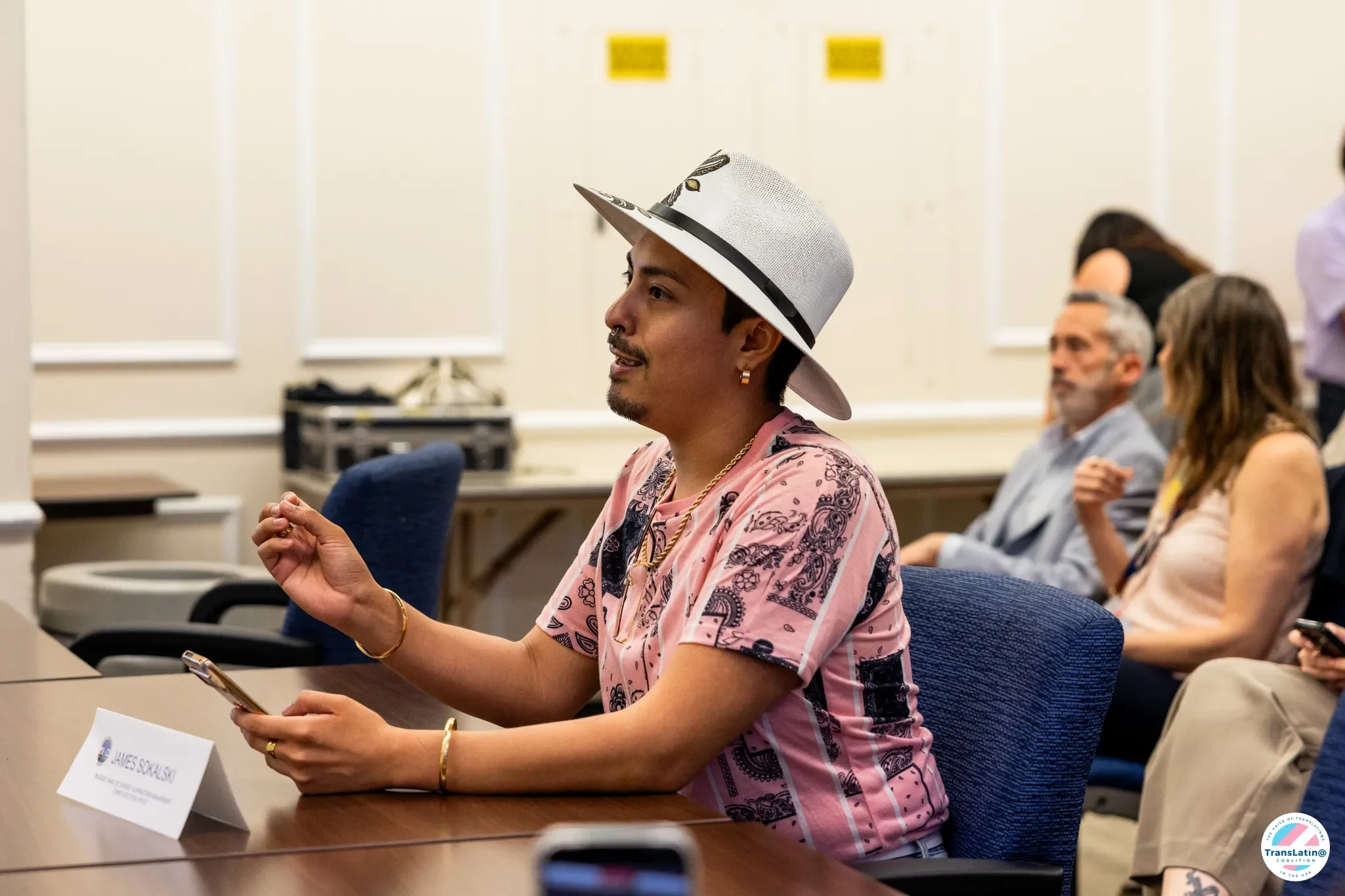
Chichi Navarro making public comment at the Los Angeles County Housing & Homelessness Cluster Meeting.
The 2023 A Quality of Life Report from the UCLA Williams Institute and The TransLatin@ Coalition further shows that TGI people in Los Angeles County experience persistent challenges in securing stable housing, accessing employment, healthcare, and overall feeling safe in their communities.
In response to these inequities, community members have developed a comprehensive and scalable model for preventing homelessness and strengthening long-term stability for TGI, disabled, elderly, system-impacted, and immigrant participants. The TGI HI calls for a $20 million investment for 15 community-based organizations throughout LA County to strengthen the systems and services that provide life-saving support through:
Program Administration & Evaluation
Program Housing Navigator(s) & Case Management
Emergency Rental Assistance (including utilities and bills)
Flexible Financial Assistance (including housing stability plans)
Rather than relying solely on short-term or crisis-based responses, this initiative seeks to build long-term capacity by investing in the community infrastructure needed to deliver equitable, culturally responsive housing and supportive services.
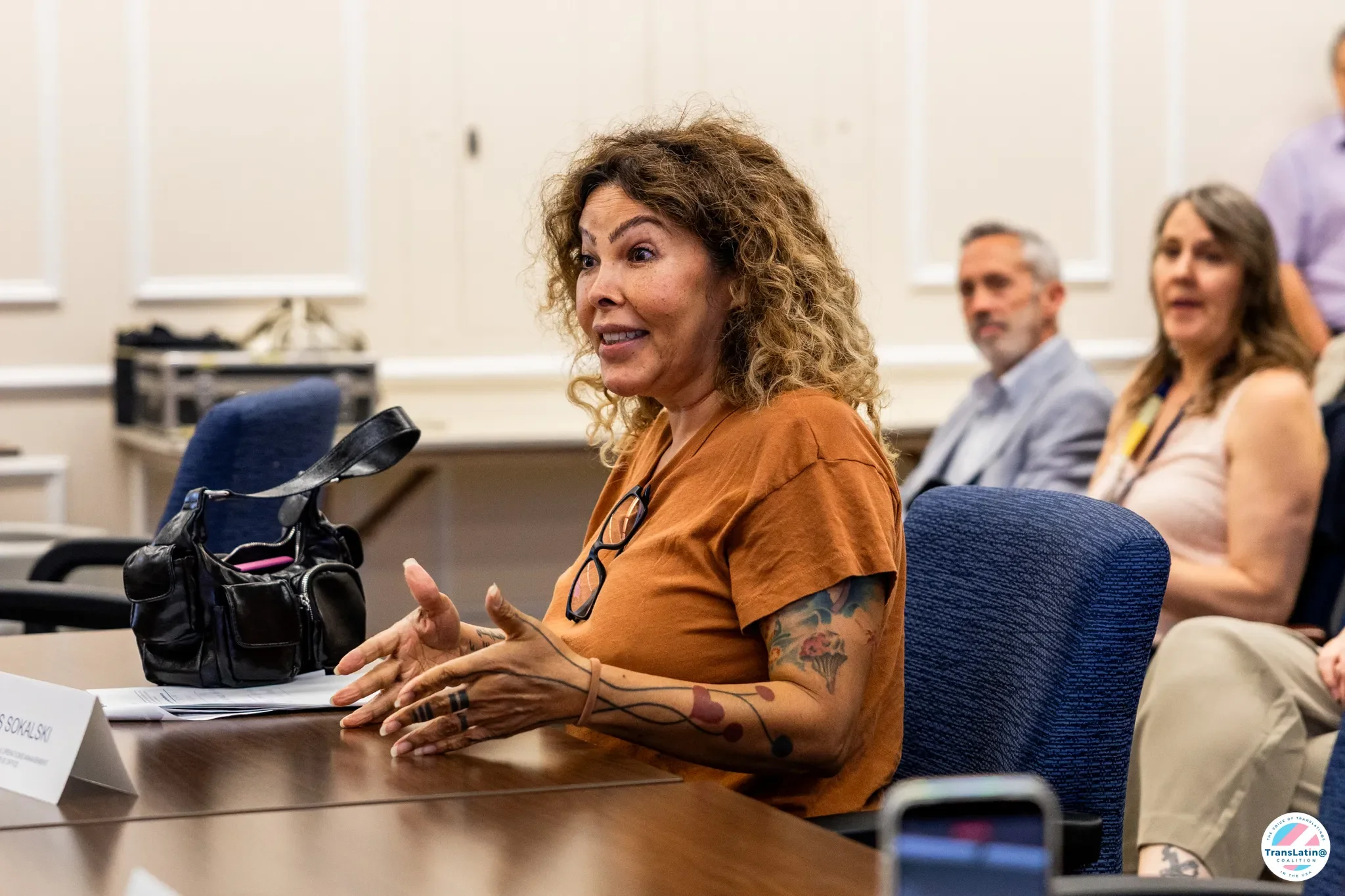
Community member making public comment at the Los Angeles County Housing & Homelessness Cluster Meeting.
We are especially grateful to the Los Angeles County LGBTQ+ Commission for their letter of support for the TGI Housing Initiative and for their recommendation to secure space on the meeting agenda, which was instrumental in ensuring this important conversation reached key county stakeholders.
Meaningful progress requires collaboration and we appreciate the many partners who continue to recognize that investing in community-based infrastructure is essential to addressing housing disparities and advancing equity for TGI people across Los Angeles County. We look forward to continuing these conversations and working alongside advocates, public agencies, and community leaders to turn this vision into action.

Loretta Lorraine making public comment at the Los Angeles County Housing & Homelessness Cluster Meeting.
(TGI HI) is a two-year, twenty-million-dollar community-designed pilot program that establishes a coordinated approach to housing stability, safety, and economic security. In partnership with community organizers, this initiative is structured so that the County can determine the most appropriate funding sources and implementation pathway through its own budget and operational processes.
The initiative includes several core components. These include rental assistance to keep TGI, immigrant, elderly, the formerly incarcerated, system-impacted, and disabled participants stably housed. The initiative also includes housing navigation to guide people through complex housing systems, tenant rights and legal protections to prevent unlawful evictions and discrimination, sustained investment in community-based organizations that already serve as the safety net when systems fail, and countywide coordination to ensure that services are accessible, culturally competent, and responsive to community needs.
