
Trans Pláticas Turns Community Dialogue Into Action
The TransLatin@ Coalition’s new community-centered research report amplifies the experiences, strengths, and resilience of trans Latin@ immigrants. It calls on Los Angeles County leaders and institutions to turn community knowledge into meaningful action.
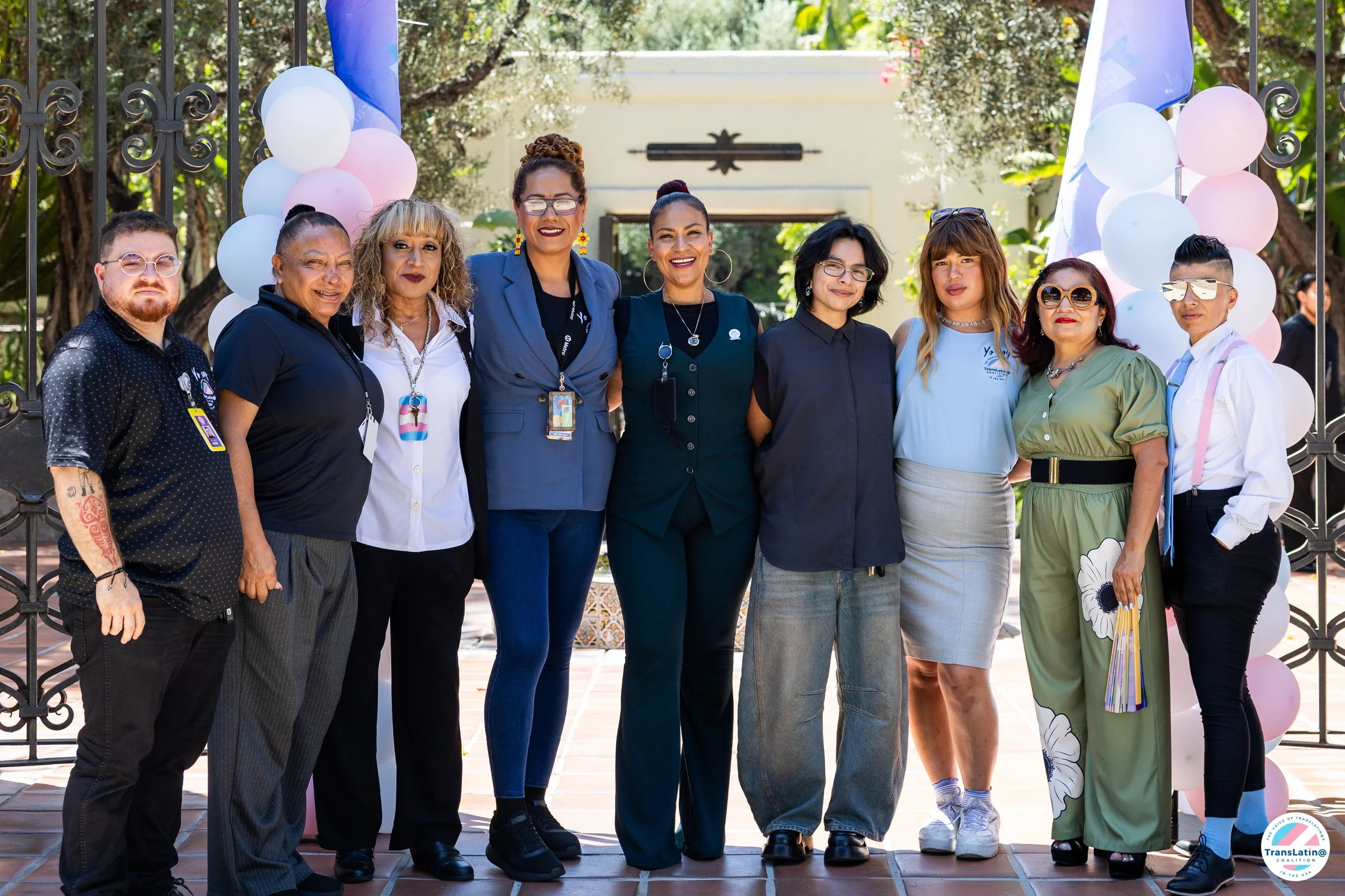
On August 21, 2026, community members, advocates, partners, and supporters gathered at the Los Angeles River Center and Gardens for the release of Trans Pláticas: Trans Latin@s in LA County Sharing Dialogue, Strength, and Resilience.
The event created space for more than a presentation. It was an afternoon of community dialogue, reflection, recognition, and collective purpose. Together, we celebrated the wisdom and leadership of trans Latin@ immigrants while asking an essential question: What would Los Angeles County look like if the people most affected by its policies and systems had real power in shaping them?
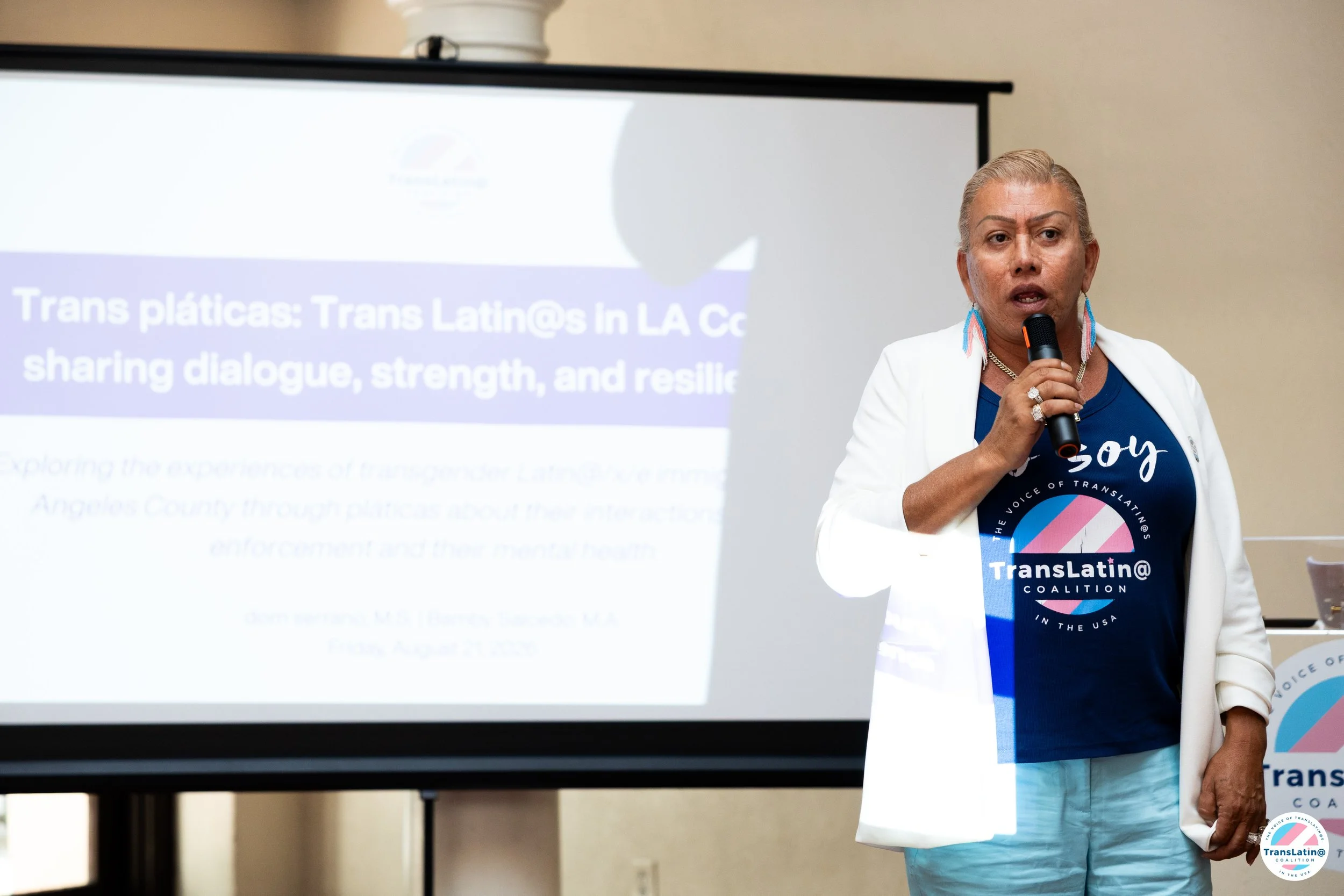
Bamby Salcedo, CEO of The TransLatin@ Coalition, welcomes attendees to the Trans Pláticas report release.
Released by The TransLatin@ Coalition, Trans Pláticas is a community-centered research report that amplifies the experiences, strengths, resilience, needs, and leadership of trans Latin@ immigrants across Los Angeles County. It also identifies actions needed to advance safety, dignity, well-being, and self-determination throughout the county.
Research shaped through community dialogue
The report was presented by Dom I. Serrano, M.S., of Mount Saint Mary’s University, who conducted the research in collaboration with The TransLatin@ Coalition and our CEO, Bamby Salcedo.
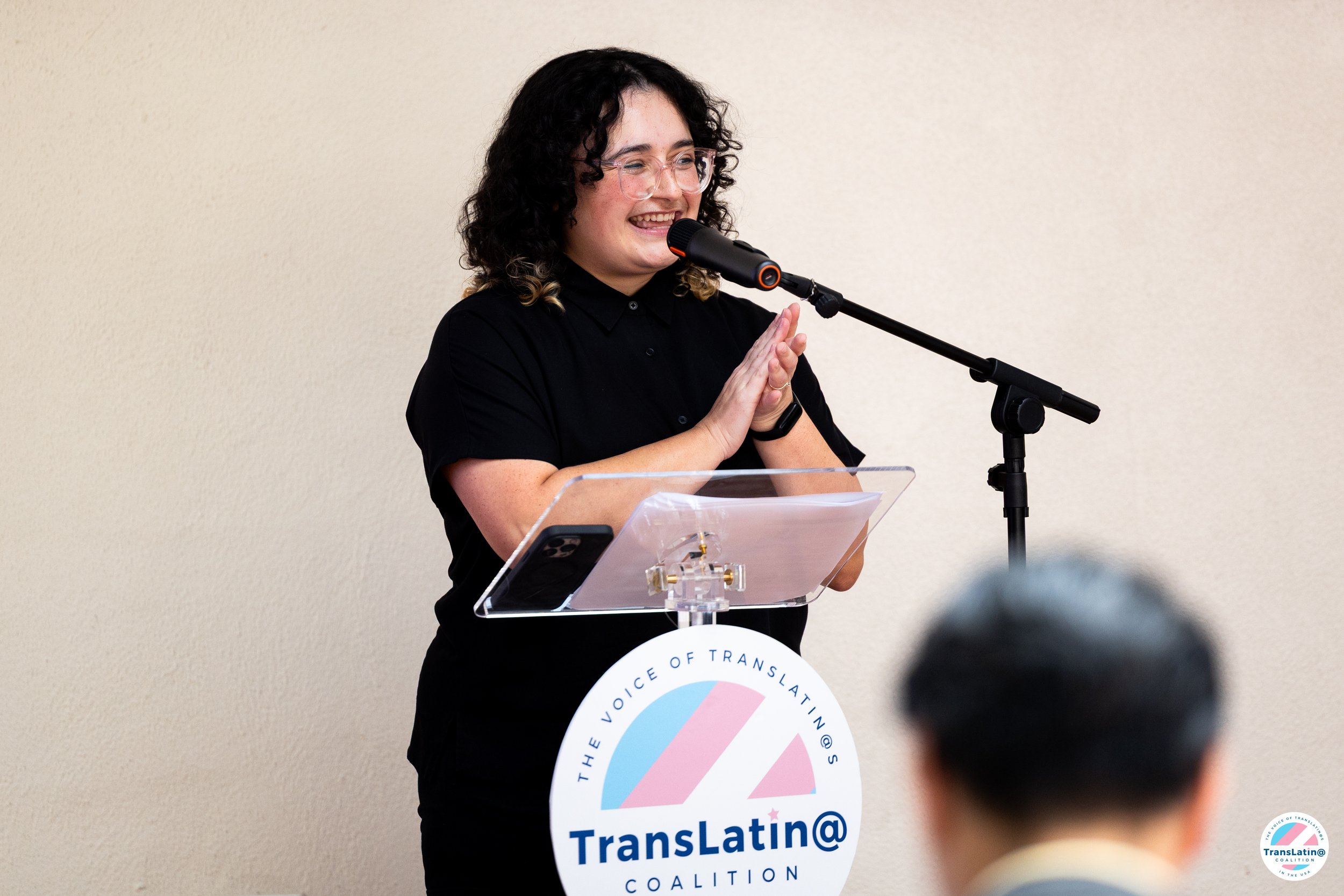
Dom I. Serrano, M.S., presents the community-centered research behind Trans Pláticas.
Their presentation explored the experiences documented through the research and considered what those experiences mean for mental health, interactions with law enforcement, access to support, and the development of more responsive policies and practices.
The release event also included a discussion about how public systems can better support our communities. Participants reflected on the implications of the research and the responsibility of agencies, service providers, advocates, funders, and elected officials to listen, learn, and act.
During the gathering, Bamby Salcedo and Dom I. Serrano received recognition from the office of California Assemblymember Jessica Caloza for their work on the report and their commitment to bringing community experiences into public dialogue.
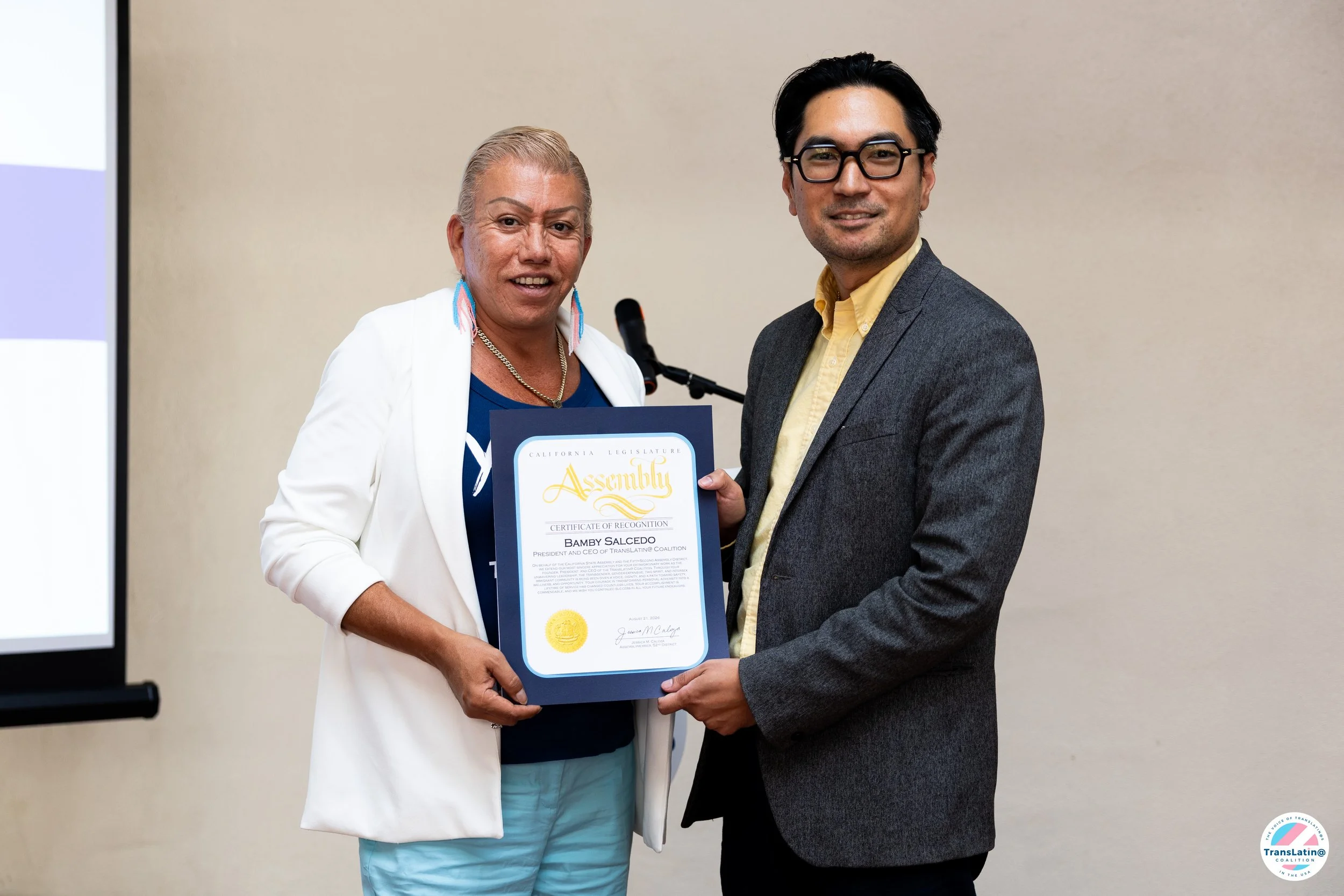
Bamby Salcedo receives recognition from the office of Assemblymember Jessica Caloza for her work on Trans Pláticas.
The people closest to the issues must shape the solutions
Too often, transgender, gender-expansive, and intersex (TGI) people are discussed in research, policy meetings, and funding decisions without being given meaningful power within those processes. Our lives become statistics or talking points while the knowledge we carry is treated as secondary.
Community-driven research offers a different path.
It recognizes trans Latin@ immigrants as experts on their own lives and as leaders with knowledge about what safety, belonging, care, and opportunity should look like. It begins with listening, builds from lived experience, and treats community members as participants in change rather than subjects of study.
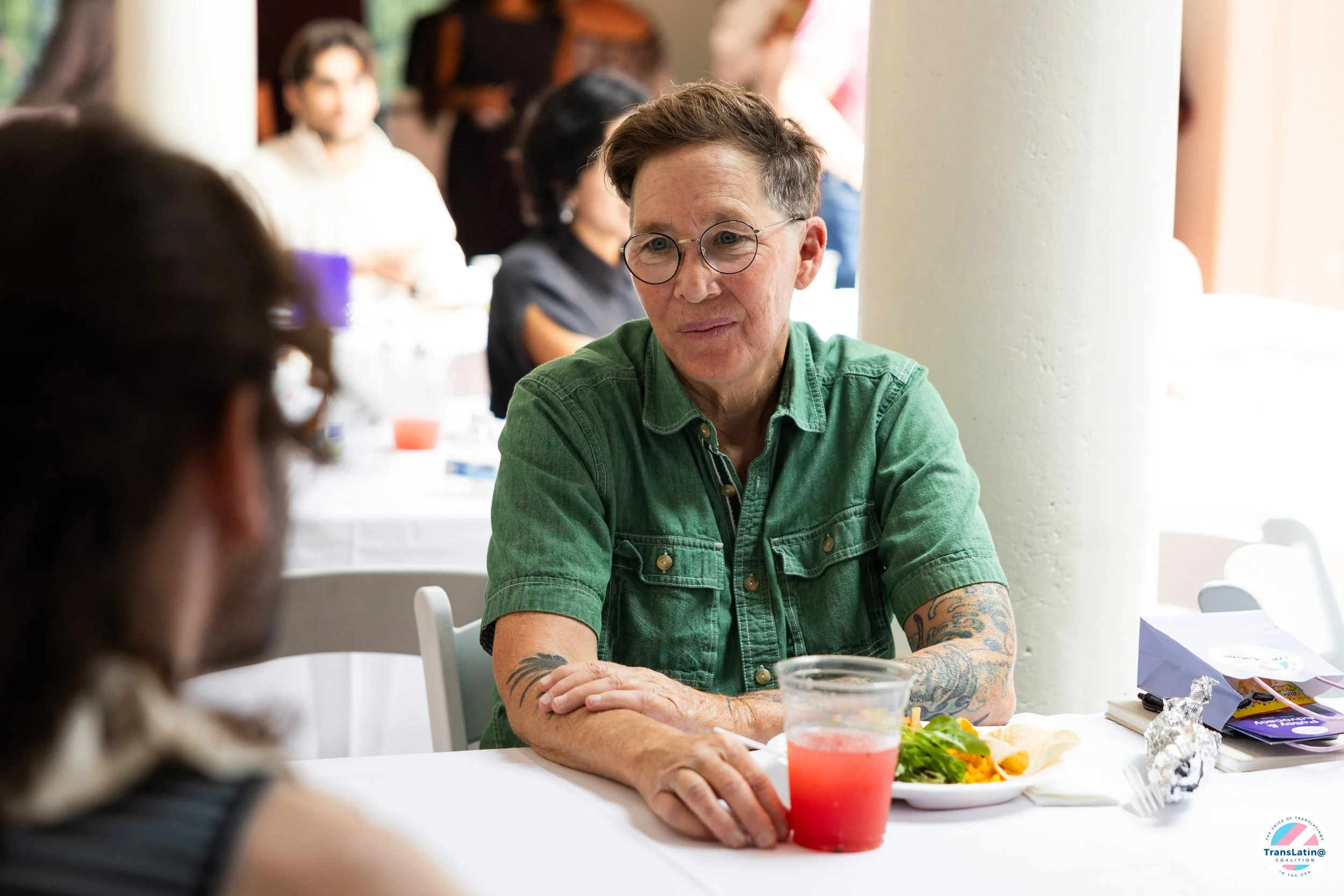
Community members gathered to listen, reflect, and discuss how research can support meaningful change.
This matters because effective programs and policies cannot be created from a distance. The people who navigate barriers, build networks of care, support their familia elegida, and imagine better futures understand both where systems fall short and what meaningful change requires.
When community voices guide research, the questions become more relevant. The conclusions carry greater accountability. Most importantly, the work can help move institutions toward solutions shaped with our community, not merely about us.
From research to responsibility
Trans Pláticas is not simply a report to download, read once, and place on a shelf. It is a call to action across Los Angeles County.
Public agencies, funders, service providers, advocates, elected officials, and community partners all have a role in advancing the safety, dignity, well-being, and self-determination of trans Latin@ immigrants. That begins with taking community experiences seriously. It also requires examining policies, practices, funding priorities, and systems that affect whether people can access resources, feel safe, experience belonging, and live with dignity.
The release event opened an important conversation about mental health, law enforcement, public policy, and the conditions our communities encounter. We hope it becomes the beginning of many more conversations, partnerships, and concrete actions.
Research can help document what people experience, but documentation alone is not enough. Institutions must be willing to respond. Community partners must remain accountable. Decision-makers must recognize that listening is only the first step.
Read, share, and carry the conversation forward
We thank everyone who contributed their experiences, knowledge, labor, and care to this project. We also thank the community members, advocates, supporters, Assemblymember Jessica Caloza, and the Los Angeles River Center and Gardens for helping create a welcoming place for collective reflection and action.
The strength of this report comes from nuestra comunidad: from people who continue to care for one another, create solutions, challenge harmful systems, and lead with courage and vision.
We invite you to read and download Trans Pláticas, share it with your networks, and bring its message into conversations with agencies, funders, service providers, advocates, community organizations, and elected officials.
You can also view photos from the August 21 release event.
Our collective responsibility now is to carry these pláticas beyond the room and turn community dialogue into durable change.
See more from the Trans Pláticas Report Launch
View photos from the August 21, 2026 community gathering.
View Photo Gallery